
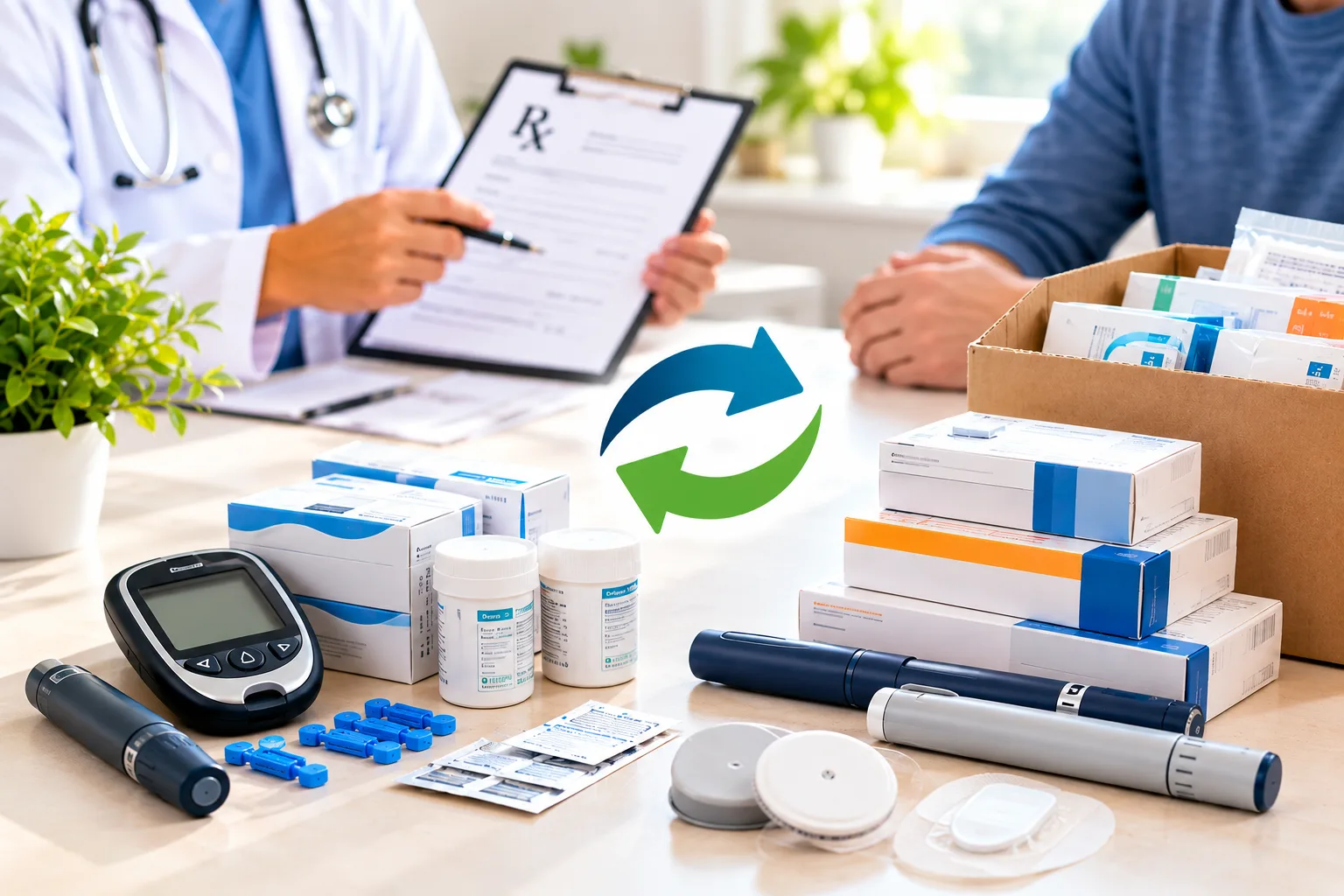
Unused Diabetic Supplies After a Prescription Change
A prescription change — a new medication, a different testing frequency, a switch in monitoring method — is a normal part of managing diabetes over time. But it often leaves behind supplies that no longer fit your updated care plan. Here’s how to handle them.
Common Prescription Changes That Create Surplus
- A switch from fingerstick testing to a CGM (or vice versa)
- A change in insulin type or delivery method (vials to pens, or a new pump system)
- A reduction in recommended testing frequency
- A change in preferred meter or test strip brand
Step 1: Confirm Your Updated Plan With Your Doctor
Before setting aside any supplies, make sure you fully understand your new prescription and what, if anything, you should still keep as backup.
Step 2: Identify What’s Genuinely Surplus
Once your new plan is clear, sort through your current supplies and separate what you’ll still use from what no longer applies — unopened boxes of a discontinued testing method, for example, or medication delivery supplies you no longer need.
Step 3: Sell What’s Unopened and Unexpired
Supplies that are sealed, unopened, and still within their expiration window generally retain resale value. MyDiabetesGuru buys unused diabetic supplies including test strips, CGM sensors, syringes, and pen needles — directly from individuals, regardless of why your prescription changed.
Step 4: Don’t Attempt to Return Prescription Medication
Unlike test strips or sensors, unused prescription medications like insulin typically cannot be resold and should be disposed of through your pharmacy’s take-back program or local disposal guidelines — never sold or given to another person.
Step 5: Properly Dispose of Anything That Doesn’t Qualify
If supplies are expired, opened, or otherwise ineligible for resale, follow your local guidelines for medical supply or sharps disposal.
Related Reading
- For a broader look at handling any leftover supplies, see What to Do With Extra Diabetic Supplies You No Longer Need
- If your insurance change was prompted by a doctor adjusting your treatment plan, see What to Do With Unused Diabetic Supplies After a Prescription Change
FAQs About Supplies After a Prescription Change
Can I sell unused insulin if my prescription changed? Generally, no — insulin and other prescription medications are subject to strict regulations and typically cannot be legally resold by individuals. Dispose of it through a pharmacy take-back program instead.
What if my new prescription still uses the same test strip brand, just less often? If you’re testing less frequently but still using the same brand, you likely don’t have true surplus — only sell what you’re confident you won’t need.
Is it safe to keep old supplies as backup just in case? It can be reasonable to keep a small backup supply, but be mindful of expiration dates on anything you hold onto long-term.
Can I give unused supplies to a family member instead of selling them? If the supplies are unopened and unexpired, and the family member uses a compatible device, this is generally fine, though selling is often simpler for test strips and sensors.
Who do I talk to about disposing of unused insulin safely? Your pharmacist can usually guide you to local take-back programs or proper disposal methods for unused medication.
Conclusion
A prescription change is a normal part of managing diabetes, but it doesn’t mean your leftover supplies have to go to waste. Confirm your new plan, separate what’s truly surplus, and sell or responsibly dispose of the rest.
Sell Your Surplus Supplies
Visit MyDiabetesGuru to learn more, or contact us for a quote on supplies left over from a prescription change.
For additional information about the safe use of glucose meters and test strips, see the FDA guidance on glucose meters and test strips.
Disclaimer: This article is for informational purposes only and does not constitute medical advice. Always consult your physician regarding changes to your treatment plan, and never resell or redistribute prescription medications.