
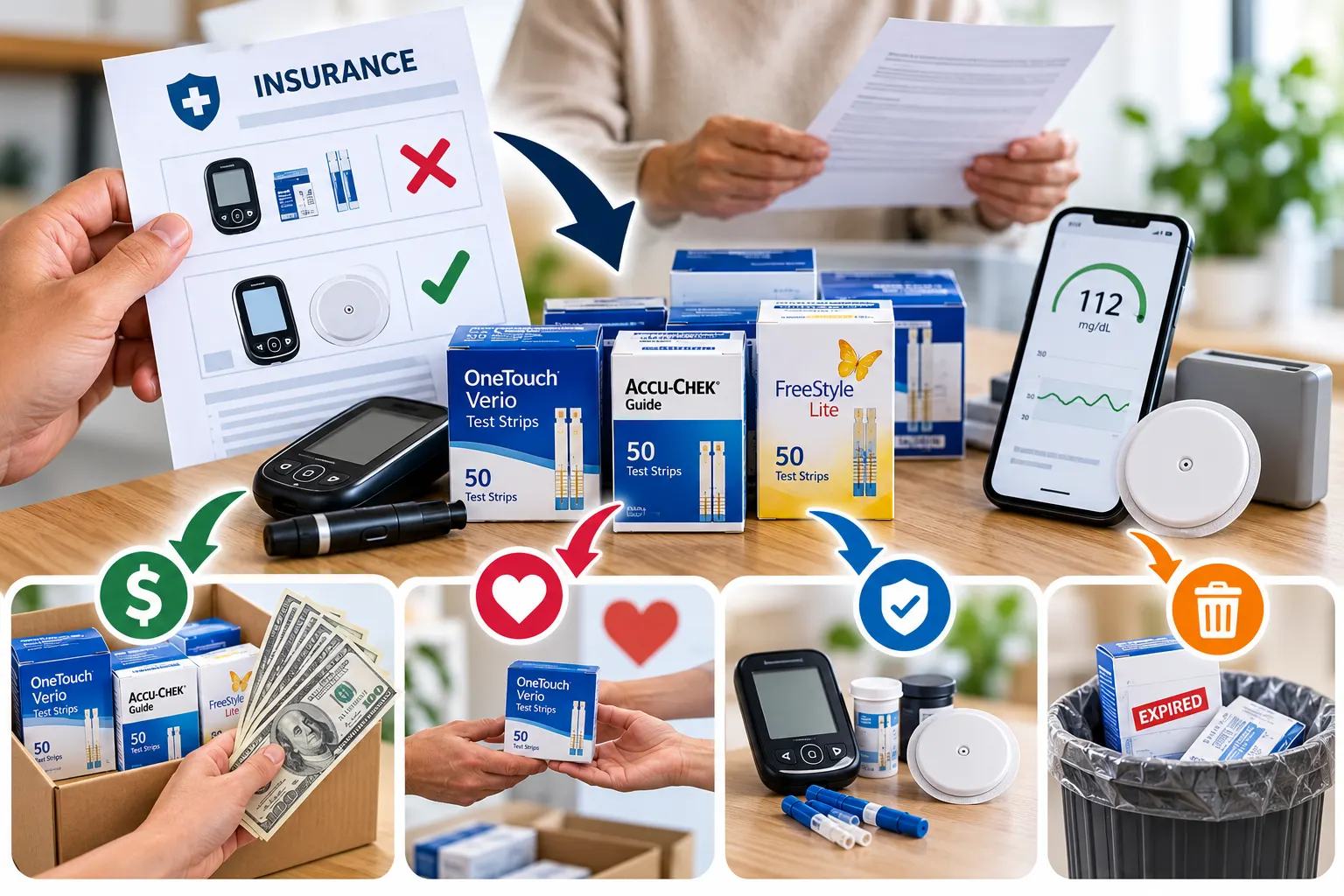
What to Do With Extra Diabetes Supplies After Changing Insurance
A change in insurance coverage — a new plan, a new employer, a shift in your formulary — can suddenly make your current meter, test strips, or CGM system more expensive or no longer covered. If that’s left you with unused supplies that no longer fit your new plan, here’s what to do next.
Why Insurance Changes Create Supply Surplus
Insurance plans frequently update which specific brands of meters, test strips, and CGM systems they cover under a “preferred” formulary. When your plan changes which brand it covers, you may be switched to a new device entirely — leaving your old, perfectly good supplies unused.
Step 1: Confirm What Your New Plan Actually Covers
Before doing anything with your old supplies, double-check your new plan’s covered brands and your updated prescription. This helps you know exactly what’s now surplus versus what you might still need as backup.
Step 2: Separate What’s Still Usable From What’s Expired
Sort your old supplies into unopened, unexpired boxes versus anything expired or already opened. Only the first group has resale or donation value.
Step 3: Sell Unopened Boxes That No Longer Match Your Plan
If your old brand’s test strips or sensors are unopened and unexpired, selling them is typically the most efficient option. MyDiabetesGuru buys unused diabetic supplies directly from individuals, regardless of whether you personally still use that particular brand.
Step 4: Consider Whether to Appeal Your Insurance Change
In some cases, your doctor can submit documentation supporting medical necessity for your previous brand if switching poses a real problem for your care. This doesn’t help with supplies you’ve already accumulated, but it’s worth knowing for future coverage decisions.
Don’t Forget About Your Old Meter or Device
If your insurance change came with a new meter or CGM reader, your old device — along with any matching unopened supplies — may still have resale value even if you no longer use it personally.
Related Reading
- For a broader look at handling any leftover supplies, see What to Do With Extra Diabetic Supplies You No Longer Need
- If your insurance change was prompted by a doctor adjusting your treatment plan, see What to Do With Unused Diabetic Supplies After a Prescription Change
FAQs About Extra Supplies After an Insurance Change
Why did my insurance stop covering my usual test strips? Insurance plans periodically update their preferred formulary of covered brands, which can shift which specific meter or test strip brand is covered at the lowest cost.
Can I still use supplies that are no longer covered by my insurance? Yes, as long as they’re still within their expiration date — insurance coverage doesn’t affect whether a product is safe or effective to use.
Should I sell my old supplies or keep them as backup? This depends on your situation. If you’re confident you won’t switch back, selling unopened surplus is usually the better option rather than letting it expire unused.
Can my doctor help me keep my old insurance-covered brand? In some cases, a doctor can submit a medical necessity appeal, though outcomes vary by insurer and plan.
What should I do with unopened boxes of a brand my insurance no longer covers? Since the product itself is still valid, selling it to a buyer who purchases unused diabetic supplies is typically the most practical option.
Conclusion
An insurance change doesn’t have to mean wasted money on supplies you can no longer use. By sorting what’s still valid, confirming your new coverage, and selling what’s surplus, you can recover much of what you’d otherwise lose.
Get a Quote on Your Leftover Supplies
Visit MyDiabetesGuru to learn more, or contact us for a quote on supplies your insurance no longer covers.
For additional information about the safe use of glucose meters and test strips, see the FDA guidance on glucose meters and test strips.
Disclaimer: This article is for informational purposes only and does not constitute medical, legal, or insurance advice. Consult your insurance provider and physician regarding your specific coverage and treatment plan.