
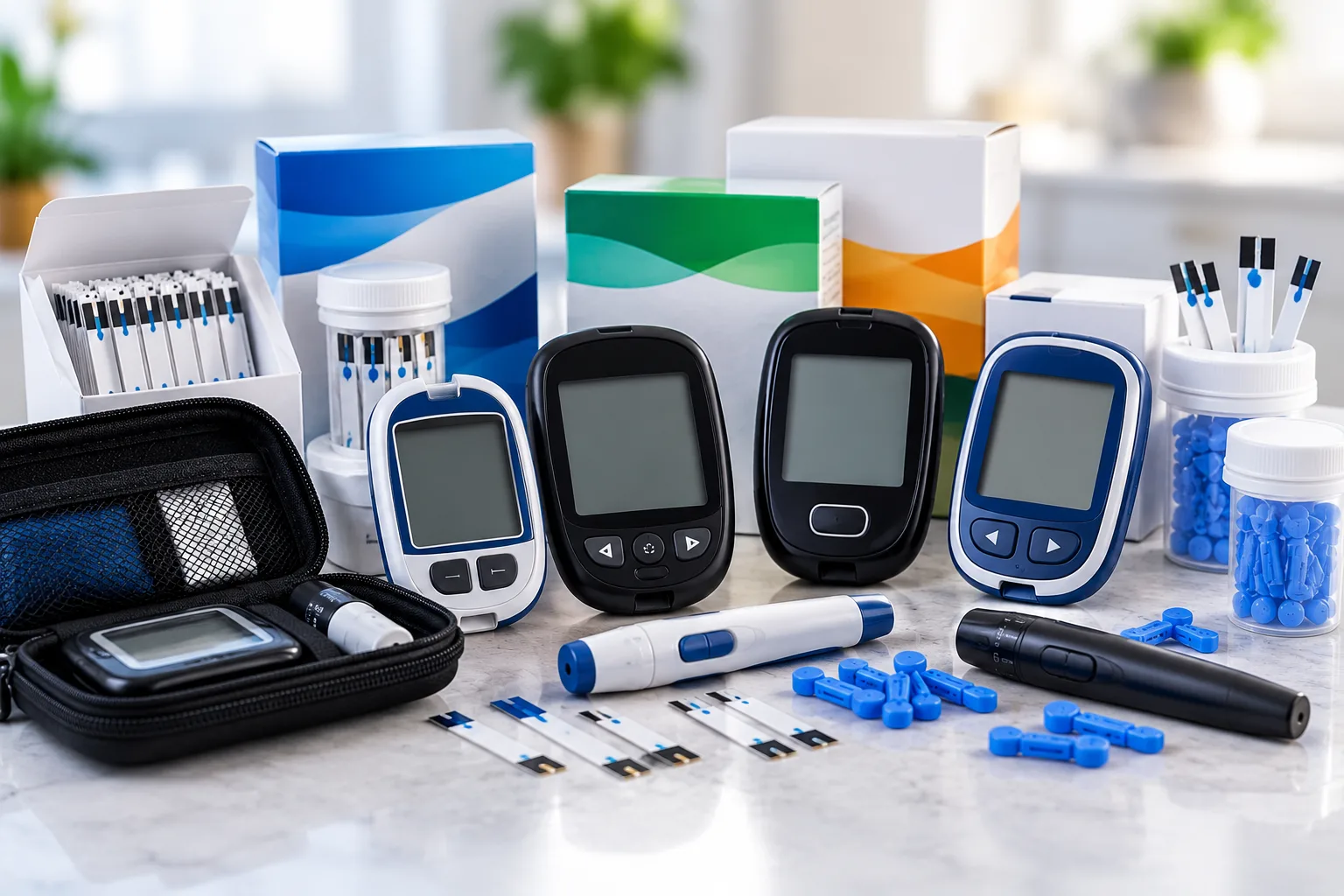
Choosing the right blood glucose meter affects your daily routine for years to come, since your meter determines which test strips you’ll be buying again and again. Before you buy a blood glucose meter, it pays to slow down and compare a few key factors — because the cheapest meter up front isn’t always the cheapest meter over time.
Why the Meter You Choose Matters More Than You Think
Meters are often sold at a low price — or even free — because manufacturers make their money on the recurring test strip purchases. That means your real cost isn’t the meter itself; it’s the strips you’ll buy for years afterward. This is one of the most important lessons in buying diabetic test strips online (Blog 1): always price out the strips before falling in love with a meter.
Key Features to Compare Before You Buy
1. Strip Cost and Availability
Before buying any meter, search for its matching test strips and check the price per strip. A meter that costs $10 but requires $1.50-per-strip test strips will cost far more over a year than a $30 meter using $0.40 strips.
2. Accuracy and FDA Clearance
Look for meters that meet current FDA accuracy standards. Reputable brands publish their clinical accuracy data — if a listing doesn’t mention this, be cautious.
3. Sample Size Required
Some meters need a larger blood sample than others. If you have circulation issues or find frequent finger pricks painful, a meter with a smaller sample requirement may be more comfortable.
4. Connectivity and Data Tracking
Many modern meters sync via Bluetooth to smartphone apps, logging your readings automatically and generating trend reports you can share with your doctor. If you or a caregiver wants to track patterns over time, this feature is worth prioritizing.
5. Display and Ease of Use
Larger screens, backlighting, and audio readouts matter significantly for older adults or anyone with vision changes.
6. Memory Storage
Look for a meter that stores at least 300–500 readings so you have a useful history between doctor visits.
Where to Buy a Blood Glucose Meter
- Pharmacies — good for immediate need, but prices vary widely
- Manufacturer websites — sometimes offer starter kits with strips and lancets included
- Online retailers and diabetic supply resellers — often the most competitive pricing on bundles
- Through your insurance’s durable medical equipment (DME) benefit — worth checking before paying out of pocket
Questions to Ask Before You Buy
- Does this meter’s strip come in a size and price I can sustain long-term?
- Is a starter kit (meter + strips + lancets) included, or sold separately?
- What is the manufacturer’s warranty and customer support like?
- Will my insurance cover strips for this specific model?
What to Do With Your Old Meter
If you’re upgrading, don’t just toss your old meter in a drawer. Many people don’t realize that unused meters — along with any unopened strip boxes that no longer match a new device — can be sold rather than discarded. MyDiabetesGuru purchases unused diabetic supplies, including unopened test strips left over from a meter switch, helping you recoup some of what you spent.
FAQs About Buying a Blood Glucose Meter
What is the most important factor when buying a glucose meter? Long-term test strip cost. The meter’s upfront price is usually far less significant than what you’ll spend on strips over months and years of testing.
Do all glucose meters require a prescription? No, most over-the-counter meters can be purchased without a prescription. A prescription is typically only needed for insurance reimbursement.
How often should I replace my glucose meter? Most meters last 3–5 years with proper care, though many people upgrade sooner for better features like Bluetooth connectivity or smaller sample requirements.
Can I use test strips from a different brand in my meter? No. Test strips are calibrated to match a specific meter model. Using mismatched strips can produce inaccurate readings and should be avoided.
What should I do with an old meter I no longer use? Consider selling any unused, unopened supplies that came with it — such as leftover test strips or lancets — to a diabetic supply buyer instead of discarding them.
Conclusion
Buying a blood glucose meter is about more than the sticker price on the box. Factor in strip cost, accuracy, comfort, and connectivity to choose a device you’ll actually be comfortable using every day. And when you do upgrade, remember your unused leftover supplies still have value.
Ready to Buy Supplies or Sell What You Don’t Need?
Visit MyDiabetesGuru to learn more, or get in touch if you have unopened meters, strips, or other diabetic supplies you’d like to sell.
Disclaimer: This article is for informational purposes only and is not medical advice. Consult your doctor or diabetes care team before choosing a new glucose meter or changing your monitoring routine.