
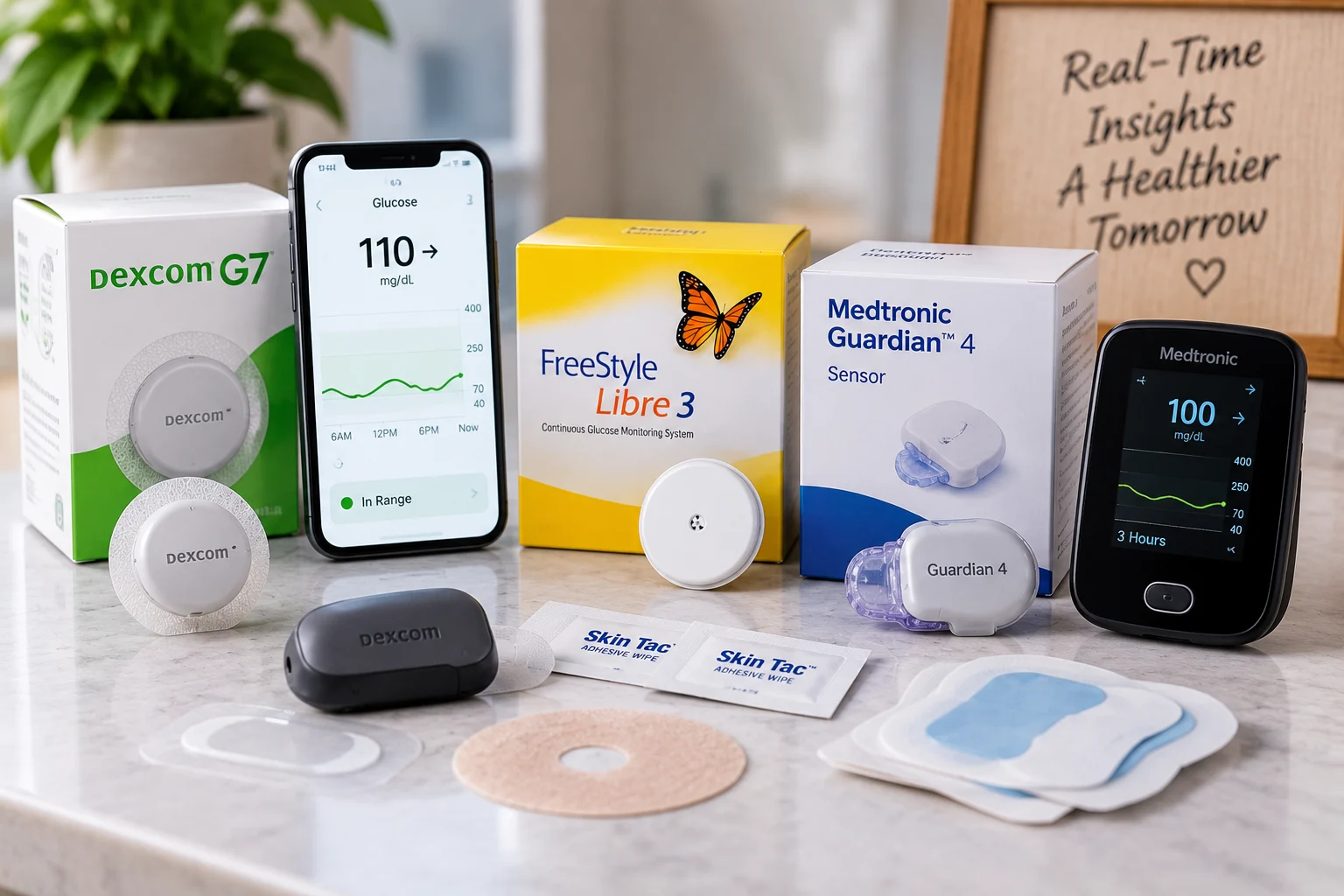
Continuous glucose monitors (CGMs) have transformed diabetes management by eliminating most routine finger pricks and providing real-time glucose trends. But CGM supplies — sensors, transmitters, and sometimes separate readers — are a recurring cost that adds up fast. Here’s what to know before you buy CGM supplies.
What Makes Up a Complete CGM System?
Most CGM systems require you to buy and replace several components:
- Sensors — the disposable part worn on the skin, typically replaced every 10–14 days
- Transmitters — reusable devices that send data from the sensor to your phone or reader (lifespan varies by brand, from single-use to several months)
- Readers — a dedicated handheld device, if you don’t use a smartphone app
- Adhesive overpatches — optional extra adhesive to help sensors stay on longer, especially useful for active users
Comparing CGM Brands Before You Buy
Not all CGMs are compatible with all smartphones, and sensor-wear duration, calibration requirements, and alarm features vary between brands. Before purchasing:
- Confirm your smartphone model is compatible with the CGM app
- Check whether the system requires fingerstick calibration or is fully calibration-free
- Compare sensor replacement frequency — a system with 14-day sensors costs less per month than one requiring 7-day sensors, all else equal
- Ask about customizable high/low glucose alerts, especially important for caregivers of children or older adults
Where to Buy CGM Supplies
- Specialty pharmacies — often the default channel for insurance-covered CGM supplies
- Manufacturer websites — useful for cash-pay customers, sometimes with savings programs
- DME (durable medical equipment) suppliers — may offer bundled pricing on sensors and transmitters
- Verified online resellers — worth comparing for unopened, unexpired sensor boxes at reduced prices
Cost-Saving Tips for CGM Supplies
- Ask your CGM manufacturer about patient savings cards, which can significantly cut cash-pay prices
- Request a 90-day supply through mail order when possible, which is often cheaper per unit than 30-day fills
- If your insurance changes and you have unopened sensor boxes for an old system, don’t let them expire — see below
- Compare your CGM’s ongoing costs to traditional testing; Blog 1 on buying diabetic test strips online is a useful cost benchmark if you’re deciding between systems
What to Do With Unused CGM Sensors
It’s common to end up with unopened CGM sensor boxes after a system switch, an insurance change, or a prescription adjustment. Rather than letting boxes expire in a drawer, MyDiabetesGuru buys unused, unopened diabetic supplies — including CGM sensors and transmitters — directly from individuals. It’s a straightforward way to recover some of your cost when your treatment plan changes.
FAQs About Buying CGM Supplies
Do I need a prescription to buy CGM sensors? In most cases, yes — CGM systems are typically prescribed by a physician, and insurance coverage almost always requires a prescription on file.
How often do CGM sensors need to be replaced? This varies by brand and model, typically ranging from every 7 to 14 days. Always follow the specific wear-time guidance for your device.
Are CGM supplies covered by insurance? Many insurance plans and Medicare cover CGM supplies for eligible patients, though coverage criteria and preferred brands vary by plan. Check with your insurer directly.
Can I buy CGM sensors without a compatible transmitter or reader? No — sensors, transmitters, and readers within a CGM system are brand-specific and must be used together as designed by the manufacturer.
What should I do with unopened CGM sensors I no longer need? Consider selling unopened, unexpired boxes to a reputable diabetic supply buyer rather than letting them expire unused.
Conclusion
Buying CGM supplies involves more moving parts than traditional test strips, but understanding sensor life, compatibility, and where to shop can meaningfully lower your ongoing costs. And if your needs change, remember that unused sensors and transmitters don’t have to go to waste.
Have Unused CGM Supplies or Need to Restock?
Visit MyDiabetesGuru to learn more about buying and selling diabetic supplies, or contact us to get a quote on your unused CGM sensors and other supplies.
Disclaimer: This article is for informational purposes only and does not constitute medical advice. Always consult your physician or diabetes care team before choosing or switching a continuous glucose monitoring system.