
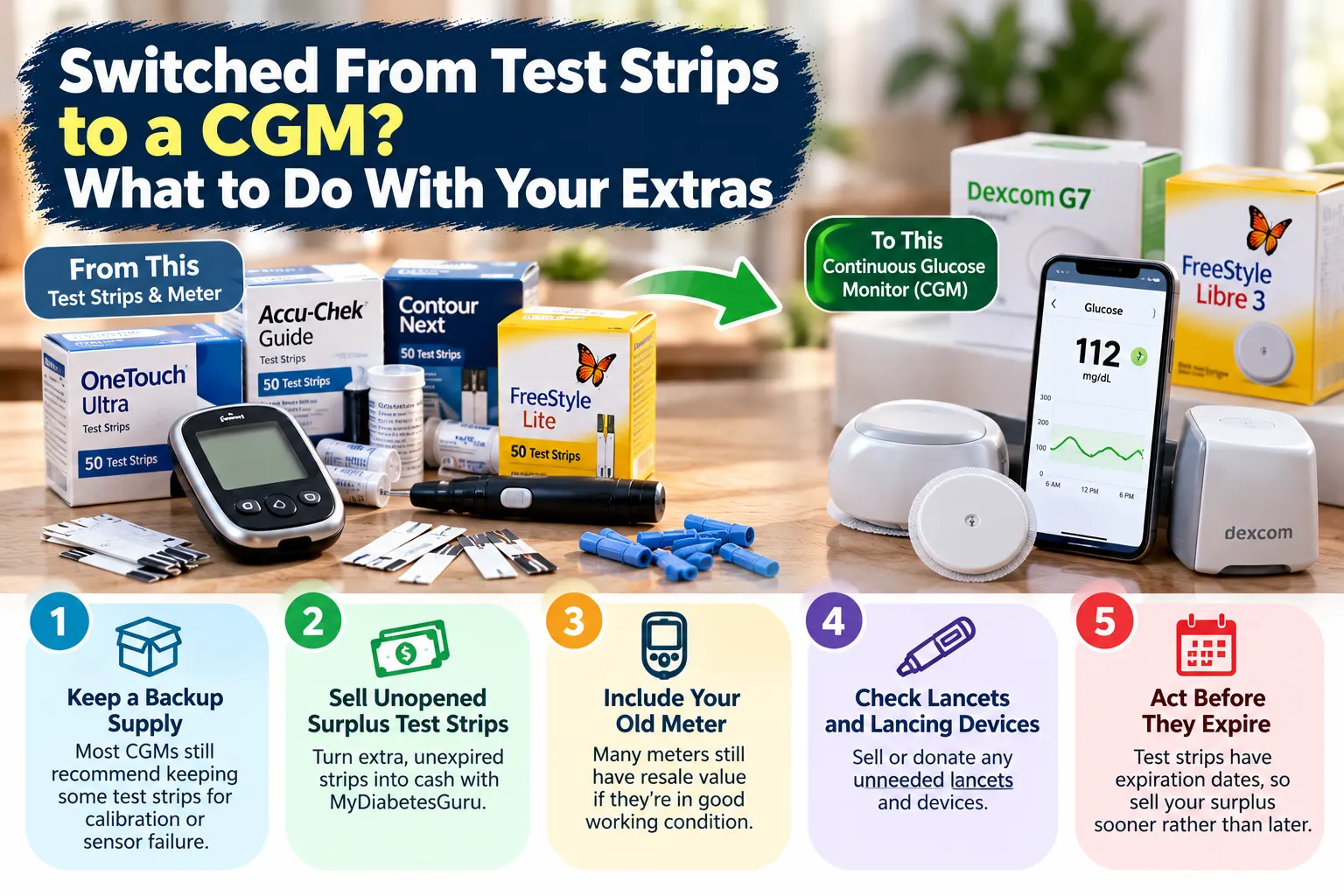
Switched From Test Strips to a CGM?
Making the move from daily fingerstick testing to a continuous glucose monitor (CGM) is a major shift in how you manage your diabetes and it often leaves you with a stockpile of test strips and possibly a meter you no longer rely on day to day. Here’s how to handle what’s left over.
Why This Transition Leaves So Many Extras
Many people build up a backlog of test strips through routine insurance refills before a CGM prescription even starts. Once the CGM takes over daily monitoring, that backlog instantly becomes more than you need.
Step 1: Confirm Your Backup Testing Requirements
Most CGM systems still recommend keeping some fingerstick testing supplies on hand — for calibration checks (depending on your specific device) or as a backup if your sensor ever fails or becomes unavailable. Set aside a reasonable backup supply before considering the rest surplus.
Step 2: Sell Your Unopened Surplus Test Strips
Once you’ve set aside backup supplies, any remaining unopened, unexpired boxes are good candidates for resale. MyDiabetesGuru purchases unused test strips directly from individuals, making this one of the simplest ways to recover value from a CGM transition.
Step 3: Don’t Forget Your Old Meter
If you have a glucose meter you no longer use daily, it may still have resale value, especially if it’s a well-known brand and in good working condition. Include it when requesting a quote alongside your test strips.
Step 4: Decide What to Do With Lancets and Lancing Devices
Depending on your CGM system, you may still need occasional lancets for calibration. If you have a genuine surplus beyond what you’ll use, these can often be sold or donated alongside your test strips.
Timing Matters
Since test strips have their own expiration dates, it’s best to sell your surplus relatively soon after your CGM transition rather than letting boxes sit for months while you adjust to your new routine.
Related Reading
This topic overlaps closely with our guide on What to Do With Unused Test Strips After Switching to a CGM, which covers additional options like donation. For broader guidance, see What to Do With Extra Diabetic Supplies You No Longer Need
FAQs About Extras After a CGM Switch
Do I need to keep any test strips at all once I have a CGM? Most CGM manufacturers recommend keeping a small backup supply for calibration or sensor failure situations — check your specific device’s guidance.
Can I sell my meter along with my test strips? Yes, many buyers accept meters in good working condition alongside unopened test strip boxes.
How soon after switching to a CGM should I sell my extra strips? It’s best to act within a reasonable window — since test strips expire, waiting too long can reduce their resale value.
What if I have strips for more than one meter brand? That’s fine — most buyers can quote across multiple brands in a single transaction.
Should I keep my old meter as a backup in case my CGM fails? Many people do keep one backup meter and a small strip supply for this reason — just sell any amount beyond that reasonable backup.
Conclusion
Switching from test strips to a CGM is one of the most common reasons for a sudden surplus of testing supplies. Keep a sensible backup, and sell the rest before expiration dates reduce their value.
Sell Your CGM Transition Surplus
Visit MyDiabetesGuru to learn more, or contact us for a quote on your leftover test strips and meter.
For additional information about the safe use of glucose meters and test strips, see the FDA guidance on glucose meters and test strips.
Disclaimer: This article is for informational purposes only and does not constitute medical advice. Consult your physician or diabetes care team regarding appropriate backup testing supplies for your specific CGM system.