
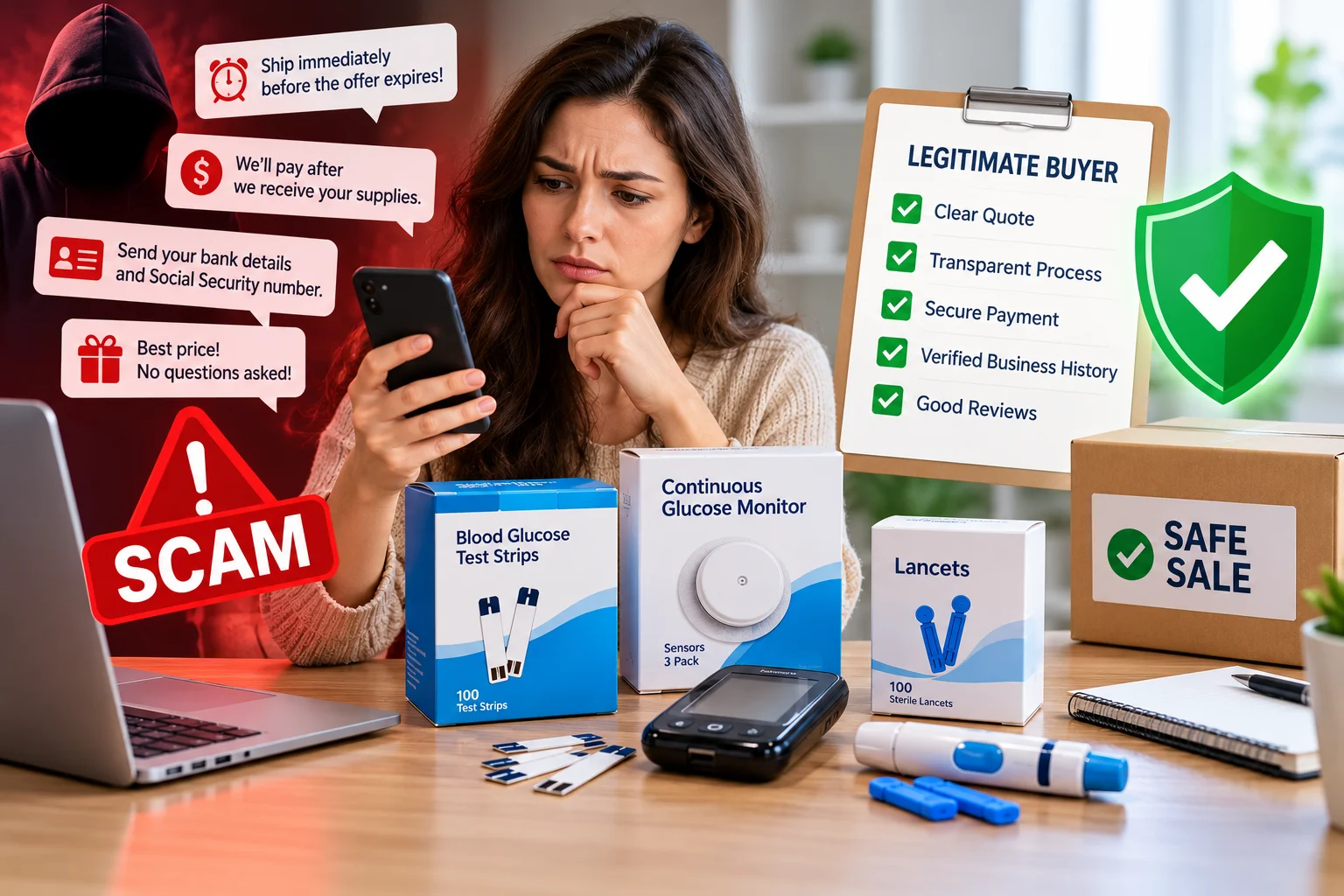
How to Spot (and Avoid) Diabetic Supply Buyer Scams
Unfortunately, the resale market for diabetic supplies isn’t immune to scammers looking to take advantage of sellers. Knowing the warning signs ahead of time can save you a lot of frustration — and protect your personal information.
Common Diabetic Supply Buyer Scams to Watch For
1. Vague or Missing Quotes
Legitimate buyers provide a clear quote, or at least a transparent pricing structure, before asking you to ship anything. A buyer who refuses to discuss price until after they’ve received your supplies is a major red flag.
2. Pressure to Ship Immediately
Scammers often create a false sense of urgency, pressuring you to ship quickly “before the offer expires.” Reputable buyers don’t need to rush you.
3. Requests for Unrelated Personal Information
You should never need to provide sensitive financial details — like your full bank account number or Social Security number — just to sell test strips. Basic shipping and payment information is normal; anything beyond that should raise questions.
4. No Verifiable Business History
Legitimate buyers typically have an established online presence, verifiable contact information, and some form of track record. A buyer with no history, no reviews, and no way to verify their legitimacy deserves extra scrutiny.
5. Payment That Never Arrives
Some scammers simply never pay after receiving supplies. This is why it’s worth researching a buyer’s reputation and payment process before shipping anything of value.
How to Protect Yourself From Diabetic Supply Scams
- Get your quote and payment terms in writing before shipping.
- Research the buyer’s business history and look for independent reviews.
- Never share financial information beyond what’s needed for payment.
- Keep records of your shipment, including tracking numbers and photos of what you sent.
- Trust your instincts — if something feels off, it’s worth pausing before proceeding.
What to Do If You Think You’ve Been Scammed
If you believe you’ve been scammed, document everything you have (communications, shipping records, photos), and consider reporting the incident to your state’s consumer protection office or the Federal Trade Commission.
FAQs About Diabetic Supply Buyer Scams
Q1: What’s the Biggest Red Flag to Watch For?
A buyer who won’t provide a clear quote or pricing explanation before you ship your supplies is one of the clearest warning signs of a problem.
Q2: Is It Normal for a Buyer to Ask for My Bank Account Information?
Basic payment details needed to send you money are normal, but you should never need to share sensitive financial information like a full account or Social Security number just to sell test strips.
Q3: How Can I Verify a Buyer Is Legitimate Before Working With Them?
Look for a verifiable business history, independent reviews, and transparent, upfront communication about their process.
Q4: Should I Keep Records of My Shipment?
Yes, always keep shipping confirmation, tracking numbers, and ideally photos of what you sent in case any dispute arises later.
Q5: What Should I Do If a Buyer Never Pays Me?
Document everything and consider reporting the issue to your state’s consumer protection office or the Federal Trade Commission.
Conclusion: How to Avoid Diabetic Supply Buyer Scams
Most diabetic supply buyers are legitimate, but a little caution goes a long way. Look for transparent pricing, verifiable business history, and reasonable, unhurried communication before you ship anything of value.
Sell Your Diabetic Supplies With Confidence
Visit MyDiabetesGuru to learn more about our transparent process, or contact us for a straightforward quote.
For additional information about the safe use of glucose meters and test strips, see the FDA guidance on glucose meters and test strips.
Disclaimer: This article is for informational purposes only and does not constitute legal or financial advice. If you believe you’ve been the victim of fraud, consider reporting it to your state’s consumer protection office or the Federal Trade Commission.