
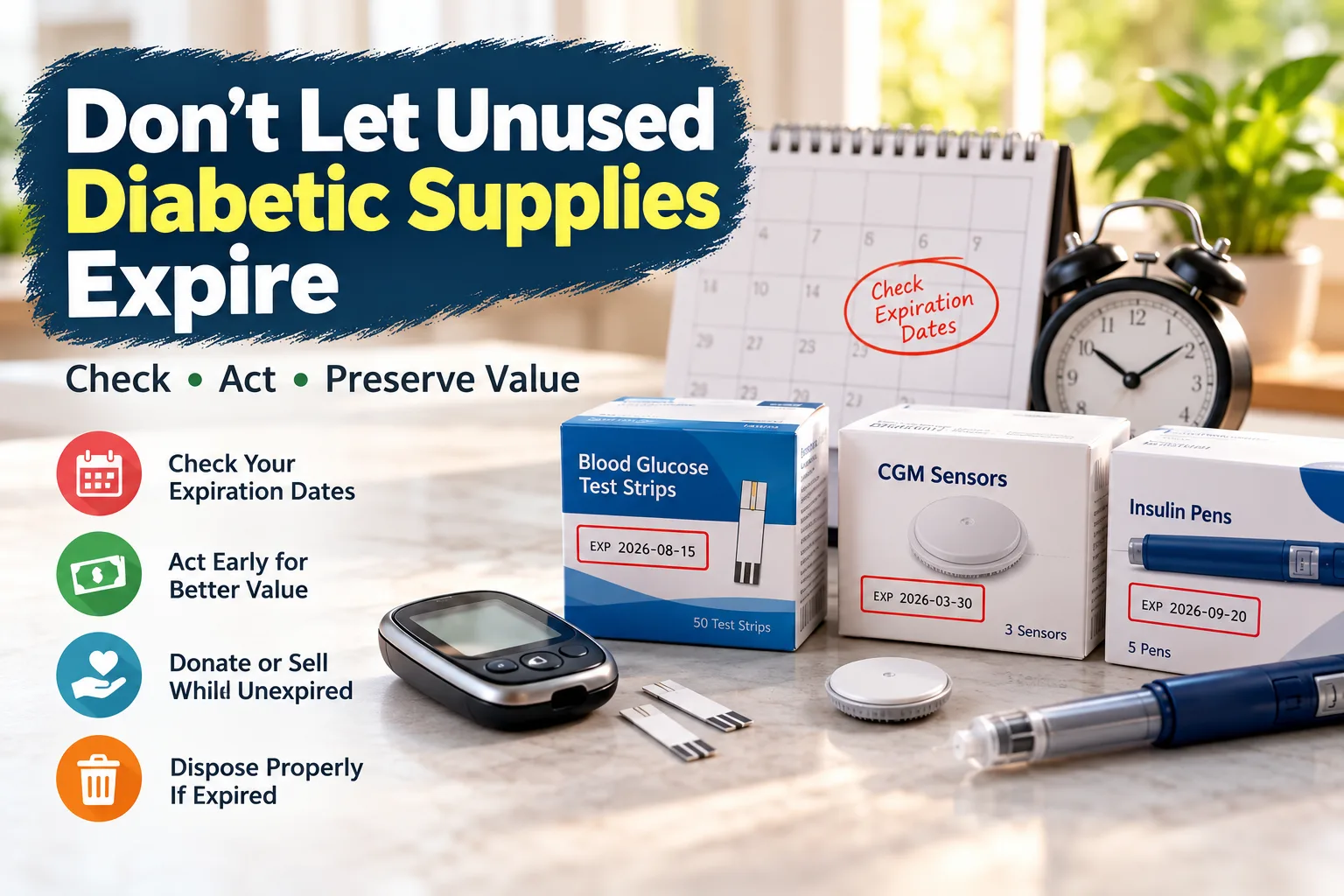
Don’t Let Unused Diabetic Supplies Expire: What You Can Do
Every unopened box of test strips or CGM sensors sitting in a drawer is on a clock. Once the expiration date passes, your options disappear almost entirely — what was once sellable or donatable becomes simple waste. Here’s how to make sure that doesn’t happen to your supplies.
Why Expiration Dates Are the Real Deadline
Unlike many household items, diabetic supplies have a firm expiration date tied to their chemical and material components. Past that date, test strips can produce inaccurate readings and sensors may not function reliably — which is exactly why reputable buyers, donation programs, and you yourself should never use or redistribute expired supplies.
The Cost of Waiting Too Long
- Reduced resale value as the remaining shelf life shrinks
- Buyer refusal once a product gets too close to its expiration date
- Lost donation eligibility, since most organizations also require unexpired products
- Total loss of value once the expiration date actually passes
Step 1: Find Out What You Actually Have
Gather any diabetic supplies you’re not actively using and check the expiration date printed on each box. Don’t rely on memory — dates can be easy to misjudge after months or years in storage.
Step 2: Act on Anything With Significant Shelf Life Remaining
If you find unopened, unexpired supplies, don’t wait any longer than necessary. MyDiabetesGuru purchases unused diabetic supplies directly from individuals, and acting sooner — while shelf life remains strong — generally means a better offer.
Step 3: Set a Recurring Reminder
Consider checking your diabetic supply inventory on a set schedule — every few months, for example — so you catch anything approaching its expiration date well before it’s too late to sell or donate.
Step 4: Know When It’s Already Too Late
If supplies have already expired, your remaining option is proper disposal rather than resale or donation. Check local pharmaceutical or medical waste disposal guidelines, since expired supplies shouldn’t go directly into household trash either.
This Applies to All Diabetic Supplies, Not Just Test Strips
CGM sensors, in particular, often have shorter shelf-life windows than test strips, making timely action even more important. Whatever type of supply you have on hand, the same core principle applies: the sooner you act, the more value you preserve.
Related Reading
For the full range of options available to you, see What to Do With Extra Diabetic Supplies You No Longer Need
FAQs About Diabetic Supply Expiration
How much does expiration date actually affect resale value? Significantly — buyers need remaining shelf life to resell a product before it expires, so supplies with more time left are consistently worth more.
Is there a general window of time before expiration when I should sell? This varies by buyer and product type, but as a general rule, sooner is always better than later when it comes to maximizing value.
Can I still donate supplies that are getting close to their expiration date? Many donation programs have similar shelf-life requirements to resale buyers, so acting early improves your chances there as well.
What should I do if my supplies have already expired? Expired supplies should be disposed of through proper medical waste channels rather than sold, donated, or used personally.
How do I keep track of expiration dates going forward? Setting a recurring reminder every few months to check your supply inventory is a simple way to stay ahead of expiration dates.
Conclusion
Unused diabetic supplies only hold their value for a limited window. Checking your inventory regularly and acting while shelf life remains strong is the simplest way to make sure your supplies don’t go to waste.
Don’t Wait — Get a Quote Today
Visit MyDiabetesGuru to learn more, or contact us for a quote on your unused diabetic supplies before time runs out.
For additional information about the safe use of glucose meters and test strips, see the FDA guidance on glucose meters and test strips.
Disclaimer: This article is for informational purposes only and does not constitute medical, legal, or financial advice. Never use, sell, or donate expired diabetic supplies. Always follow local guidelines for proper medical waste disposal.