
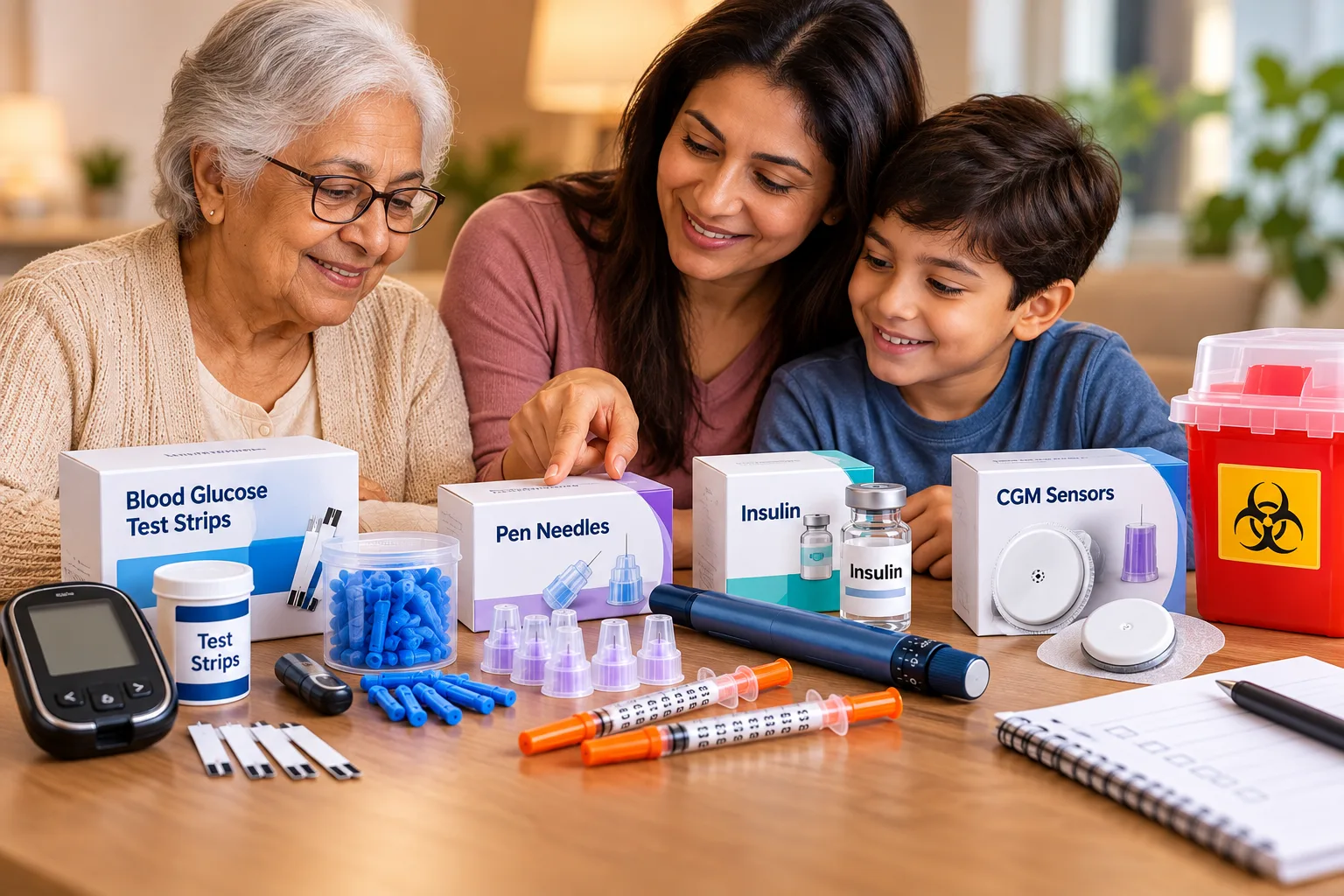
Caring for a parent, spouse, or child with diabetes often means taking on the job of purchasing and managing their supplies — sometimes on top of your own household budget. Buying diabetic supplies for a loved one comes with a few extra considerations beyond shopping for yourself. Here’s how to approach it thoughtfully.
Step 1: Get a Clear Picture of Their Full Supply List
Before buying anything, sit down with your loved one (or their care team) and list every recurring supply: meter and test strips, lancets, insulin or other medications, CGM sensors if applicable, and syringes or pen needles. Knowing the full picture prevents both overspending and running short unexpectedly.
Step 2: Understand Authorization and Prescription Requirements
- If you’re purchasing through insurance or a pharmacy benefit, you may need documented authorization to act on their behalf (especially for adult children managing a parent’s care)
- HIPAA authorization forms may be required for you to discuss prescriptions directly with pharmacies or insurers
- For a minor child’s supplies, you as a parent or guardian typically manage this directly with their pediatric endocrinology team
Step 3: Match Supplies to Their Specific Devices
Double-check exact meter, pump, or CGM models before ordering anything — devices and their consumables are not interchangeable between brands. Blog 2 (blood glucose meters) and Blog 4 (CGM supplies) can help you verify compatibility before you buy.
Special Considerations for Elderly Loved Ones
- Larger-display meters and simplified lancing devices can make daily testing easier for aging hands and eyes
- Automatic pharmacy refill and mail-order programs reduce the risk of running out
- If your loved one is in a care facility, confirm whether supplies are provided by the facility or need to be purchased separately
Special Considerations for Children with Diabetes
- School and daycare settings often require a separate, labeled supply kit kept on-site
- Smaller, shorter pen needles and lancets are typically more comfortable for children
- CGMs with remote monitoring features let caregivers track glucose trends from a separate phone, which many parents find invaluable for overnight monitoring
Managing Costs When Buying for Someone Else
- Ask about caregiver or family plan discounts through pharmacies and manufacturer savings programs
- If insurance covers your loved one, confirm whether supplies must be shipped to their address or can go to yours
- Review Blog 5 on buying diabetic supplies without insurance if your loved one is uninsured or under-insured
What to Do When Their Needs Change
Caregiving often means supply needs shift — a hospital stay changes the regimen, a device gets upgraded, or, in difficult circumstances, care needs change entirely. When that happens, unopened diabetic supplies frequently go unused. MyDiabetesGuru buys unused, unopened diabetic supplies directly from individuals and families, which can help ease the financial impact of a change in a loved one’s care plan.
FAQs About Buying Diabetic Supplies for a Loved One
Q1: Can I buy diabetic supplies on behalf of a parent or spouse?
Yes, though you may need documented authorization to act on their behalf with pharmacies or insurers, especially for prescription-based supplies.
Q2: What’s the biggest mistake caregivers make when buying supplies?
Ordering the wrong test strips, sensors, or infusion sets because they don’t match the loved one’s specific device model. Always double-check compatibility before purchasing.
Q3: Are there special supplies needed for a child with diabetes at school?
Many schools require a separate, clearly labeled supply kit for testing and treatment during school hours — check with your child’s school nurse or 504 plan coordinator.
Q4: How can I help an elderly parent manage diabetic supplies more easily?
Larger-display meters, simplified lancing devices, and automatic mail-order refill programs can all reduce the daily burden of supply management.
Q5: What should I do with leftover supplies after a loved one’s care plan changes?
Consider selling unopened, unexpired supplies to a reputable buyer rather than storing or discarding them.
Conclusion
Buying diabetic supplies for a loved one takes some extra coordination — understanding authorization requirements, matching exact device compatibility, and planning for cost — but a little preparation goes a long way toward making caregiving less stressful.
Supporting a Loved One’s Diabetes Care?
Visit MyDiabetesGuru for more caregiver resources, or contact us to sell unused diabetic supplies from a loved one’s changed care needs.
Disclaimer: This article is for informational purposes only and does not constitute medical, legal, or financial advice. Consult your loved one’s physician, pharmacist, or care team regarding their specific diabetes management needs and authorization requirements.