
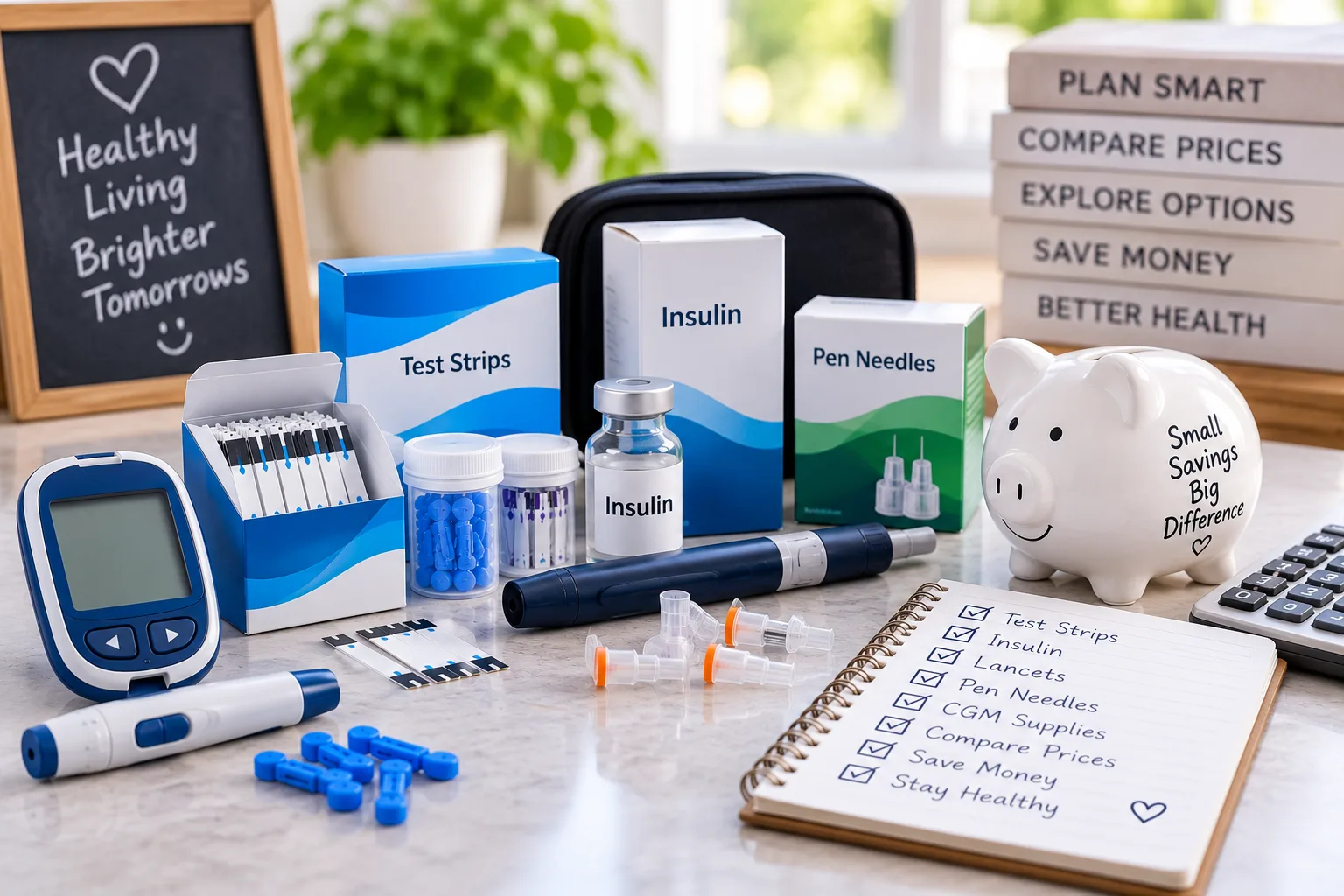
Managing diabetes without insurance coverage can feel overwhelming, especially when test strips, insulin, and monitoring devices carry retail prices that add up fast. The good news: there are real, practical ways to buy diabetic supplies without insurance and still stay within a manageable budget. Here’s where to start.
Understand Your True Costs First
Before shopping anywhere, list out exactly what you need on a recurring basis: test strips, lancets, insulin or other medications, CGM sensors, syringes or pen needles, and your meter itself. Pricing out each category separately makes it much easier to find savings where they matter most.
1. Look Into Manufacturer Patient Assistance Programs
Most major insulin and diabetes device manufacturers offer patient assistance or savings card programs for people without insurance or with high out-of-pocket costs. These programs can reduce insulin costs to a small fraction of the cash price for qualifying applicants.
2. Compare Cash Prices Across Multiple Pharmacies
Cash prices for the same medication or supply can vary significantly between pharmacies in the same city. Use price-comparison tools or simply call ahead to a few local pharmacies before filling a prescription.
3. Consider Generic and Older-Generation Options
- Older, human insulin formulations are typically far cheaper than newer analog insulins and are available without a prescription in many places
- Generic or store-brand test strips often cost significantly less than name-brand strips while meeting the same accuracy standards
- Basic, no-frills glucose meters can be just as accurate as premium connected models
4. Shop Diabetic Supply Resellers for Test Strips and Devices
Specialty resellers that deal specifically in unopened, unexpired diabetic supplies can offer meaningful savings compared to full retail pricing. Just be sure to follow the safety checks outlined in Blog 1 on buying diabetic test strips online.
5. Check Community and Nonprofit Resources
- Local health departments and community health centers often provide diabetes supplies at reduced or no cost for qualifying patients
- National diabetes nonprofit organizations sometimes run supply assistance or insulin access programs
- Some pharmacies participate in discount card networks that lower cash prices for both medications and supplies
6. Buy in Bulk When It Makes Sense
If you’ve confirmed pricing per unit is genuinely lower, buying a 90-day or 180-day supply of stable items like test strips and lancets can reduce your average cost — just make sure nothing will expire before you use it.
7. Offset Costs by Selling What You Don’t Need
If you’ve switched meters, changed treatment plans, or simply have unopened boxes of supplies sitting unused, selling them can help fund what you actually need. MyDiabetesGuru purchases unused, unopened diabetic supplies directly from individuals — a practical way to turn surplus stock into savings toward your next purchase.
FAQs About Buying Diabetic Supplies Without Insurance
What is the cheapest way to get insulin without insurance? Manufacturer patient assistance programs and savings cards typically offer the deepest discounts, followed by older human insulin formulations, which are often available at a fraction of analog insulin prices.
Are generic test strips as accurate as name-brand strips? Generally, yes. Generic and store-brand test strips sold in the U.S. must meet FDA accuracy standards, though it’s always wise to check independent reviews for a specific brand.
Can I buy diabetic supplies at a discount without a prescription? Many supplies, including most test strips, lancets, and basic meters, don’t require a prescription for purchase — only for insurance reimbursement.
Do nonprofit organizations really help with diabetes supply costs? Yes, several national and local nonprofits offer assistance programs, though eligibility requirements and available support vary. It’s worth researching options in your specific area.
What should I do with unused diabetic supplies I no longer need? Rather than letting unopened supplies expire, consider selling them to a reputable buyer to help offset the cost of what you do need.
Conclusion
Buying diabetic supplies without insurance requires more legwork, but meaningful savings are available through patient assistance programs, price comparison, generic alternatives, and community resources. Combining a few of these strategies can significantly lower your total cost of care.
Looking to Stretch Your Diabetes Supply Budget?
Visit MyDiabetesGuru for more resources, or contact us to sell any unused, unopened diabetic supplies you no longer need.
Disclaimer: This article is for informational purposes only and does not constitute medical or financial advice. Always consult your physician or a licensed financial/insurance counselor regarding your specific diabetes care and coverage options.